Midland Hotel
Pamela's WarMidland Hotel is the Birmingham hotel where Pamela Wheeler Fellows’s father, home on leave during the First World War, nearly transformed an act of drunken harassment into a fatal catastrophe. The hotel’s significance lies in the contrast between its ordinary function as a place of leisure and the violence carried into it by wartime experience: an officer in smart uniform, a civilian who mocks him, an open first-floor window, and a barman whose intervention prevents the episode from ending in arrest or worse.
Setting and Wartime Context
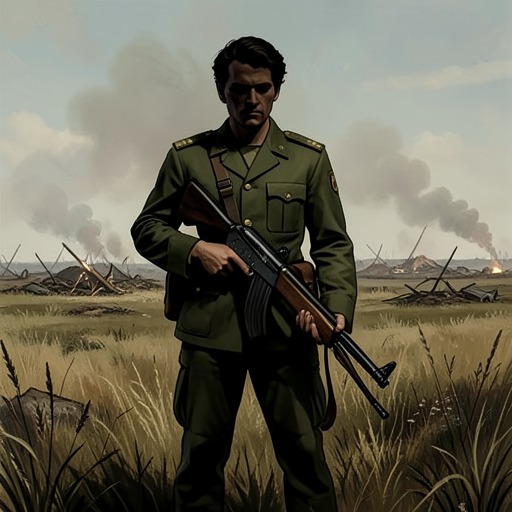
Midland Hotel appears as a local Birmingham hotel visited by Pamela Wheeler Fellows’s father while he is home on leave. Although he had joined the army as a private, the First World War had promoted him rapidly through the ranks to officer status. The uniform he wears at the hotel, complete with shiny trouser stripes, therefore represents both his military position and the experience behind it. He has come to relax, but the war has altered his tolerance for frivolity: a naturally gentle man has been toughened by what he has been forced to witness.
The hotel becomes a meeting point between those who have served and those who have not. A loud local man, subsequently called Henry, has apparently chosen not to offer himself for sacrifice when he had the opportunity and has already consumed too much alcohol. His presence turns the hotel’s social atmosphere into a moral confrontation. The setting is not a battlefield, yet the values of the battlefield—service, sacrifice, endurance, and resentment toward those who evade them—shape what happens there.
The Confrontation at the Window
Henry and his equally drunken companions continue to harangue the uniformed officer for some time. The mockery culminates when Henry asks whether he is attending there, treating the officer as if his uniform marked him out as a waiter. The response is deliberately sharp: the officer denies that he is attending as a servant but says that he can soon attend to Henry. The exchange converts humiliation into physical conflict.
The ensuing scuffle moves the two men beside an open first-floor window. Within seconds, Henry is thrown from the hotel, falling more than thirty feet toward the pavement. The incident’s suddenness is central to the hotel’s memory: a drunken joke becomes a struggle, and a struggle becomes an apparent fall to almost certain death or serious injury. The window turns an enclosed social space into a dangerous vertical precipice, making the hotel itself the mechanism through which the conflict threatens to become irreversible.
Henry survives because a large awning hangs beneath the window and catches him. The canvas cradle breaks his fall and probably saves his life, though the account does not record how he escapes from it. The uncertain detail reinforces the speed and disorder of the episode. While onlookers react with horror, the officer leaves through the back door rather than waiting to be identified.
The Barman and the Incident’s Afterlife
The barman has witnessed the entire sequence and clearly sympathizes with the officer. He removes him quickly from the scene before anyone can identify him. That practical act of assistance may prevent the officer’s war from ending in a radically different way, with the consequences of a hotel altercation replacing his military service.
The episode does not disappear after the immediate escape. Many years later, Pamela Wheeler Fellows’s father returns to Midland Hotel and is recognized by the same barman, who is still working behind the bar. Their conversation confirms that Henry survived with his ego damaged rather than his body destroyed. The barman also confirms the social judgment surrounding him: Henry was regarded as a drunken boor who deserved to be taken down a peg or two and, in the view of those present, more than deserved the treatment he received.
Narrative Significance
Midland Hotel is remembered less as a stable community landmark than as the site of a compressed wartime drama. Its bar permits mockery, its window produces peril, its awning creates an accidental reprieve, and its back door enables escape. Each part of the building participates in the chain of cause and consequence, so that ordinary architecture becomes charged by the temper of wartime Britain.
The incident also complicates the image of the soldier. Pamela Wheeler Fellows’s father is described as gentle by nature, yet the hotel scene shows how war has changed the threshold at which he will respond. His anger is directed at a civilian whose drunken contempt contrasts with the sacrifices associated with military service, but the response is so forceful that it nearly destroys the boundary between justified indignation and lethal violence. Henry’s survival allows the episode to remain a darkly comic anecdote rather than a murder story, while the barman’s later confirmation gives the memory a durable, almost legendary shape.